When Should You Call for 24/7 Emergency HVAC Repair in Chandler? A Homeowner's Heat-Season Guide
When your AC quits at 2 a.m. in July and the bedroom is already pushing 85 degrees, you don’t need a lecture on troubleshooting — you need a decision. Do you wait until morning, or do you pick up the phone right now? In Chandler, where afternoon highs sit above 110 for weeks at a time, that decision actually matters. A house without cooling can climb into dangerous territory in a few hours, especially for kids, older folks, and pets.
This guide breaks down when an HVAC issue genuinely qualifies as an emergency, what you can safely check yourself before calling, and what to expect when you reach out for 24/7 emergency HVAC in Chandler. We’ve handled enough late-night calls across Sun Lakes, Gilbert, and Ahwatukee to know that homeowners often wait too long — or sometimes panic over something that could’ve waited until morning. Both cost money. The goal here is helping you tell the difference.
What Actually Counts as an HVAC Emergency in Arizona?
In a milder climate, a broken AC is an inconvenience. In Chandler in mid-July, it’s a health and safety problem. The Maricopa County Department of Public Health tracks heat-related illness every summer, and indoor heat exposure is a real category — not just people working outside. If your home can’t maintain a reasonable temperature, that’s the threshold.
Here are the situations that genuinely warrant an after-hours call rather than waiting:
1. Your AC stops cooling and indoor temps are climbing past 85°F
If the system is running but blowing warm air, or it’s not running at all and the thermostat keeps creeping up, that’s an emergency between roughly May and September. Homes in Chandler, Queen Creek, and San Tan Valley often hit 90°F+ indoors within four to six hours of a system failure on a 110° day. For households with infants, elderly residents, or anyone with a heart or respiratory condition, you shouldn’t wait.
2. You smell something burning or hear grinding, screeching, or banging
Burning smells from vents or the air handler can indicate a seized motor, melted wiring, or a failed capacitor. Shut the system off at the thermostat and the breaker, then call. Loud mechanical noises — especially a hard metallic banging from the outdoor condenser — usually mean something’s broken loose or a compressor is failing. Running it longer makes the repair bigger.
3. You see ice on the refrigerant lines or indoor coil
A frozen evaporator coil points to airflow restriction or low refrigerant. If you keep running the system, you risk slugging liquid refrigerant back into the compressor — and compressor replacement is the most expensive single repair in residential HVAC. Turn the system off, switch the fan to “on” to thaw it, and call.
4. Water is leaking near the air handler or through the ceiling
Most Chandler homes have the air handler in the attic or a closet. When the condensate drain clogs, water backs up and either trips the float switch (system shuts off) or overflows. If you’re seeing staining on the ceiling below an attic unit, that’s an emergency — drywall and insulation damage compounds fast.
5. Electrical issues: tripped breakers, sparks, or burning outlets near the unit
Anything involving electrical smell or visible damage, treat it as urgent. Don’t keep resetting the breaker. There’s a reason it’s tripping.
6. Gas furnace problems in winter (yes, it happens here)
Chandler nights in January can drop into the 30s. If you smell gas, leave the house and call your gas utility first, then an HVAC contractor. Carbon monoxide alarms going off? Same drill — out of the house, then call.
Problems That Can Usually Wait Until Morning
Not everything needs a midnight truck roll. A few examples where holding off until normal hours is reasonable — and cheaper:
- The system is cooling, just not as cold as usual, and indoor temps are still under 80°F
- A single room is warmer than the rest (often a duct or zoning issue, not an emergency)
- The thermostat screen is blank but the temperature inside is still comfortable
- You hear a new rattle but the system is otherwise working normally
- Higher-than-usual humidity without a temperature problem
Diagnostic and parts costs run higher after hours. If your home is holding temperature and nobody’s at risk, scheduling a same-day or next-morning appointment saves money without much downside.
What to Try Before You Call
A few quick checks can save you a service fee, or at least give the technician a head start:
- Check the thermostat. Batteries dead? Set to “cool”? Set point actually lower than the current temp? It happens more than you’d think.
- Check the breakers. Both the indoor air handler and the outdoor condenser have their own breakers. A tripped breaker may reset once, but if it trips again, stop and call.
- Look at the air filter. A filter that hasn’t been changed in six months in a dusty Chandler home can choke airflow enough to freeze the coil or shut the system down on high-pressure.
- Check the condensate drain. If your air handler has a float switch and the drain is clogged, the system won’t run. A wet/dry vac on the outdoor drain line termination often clears it.
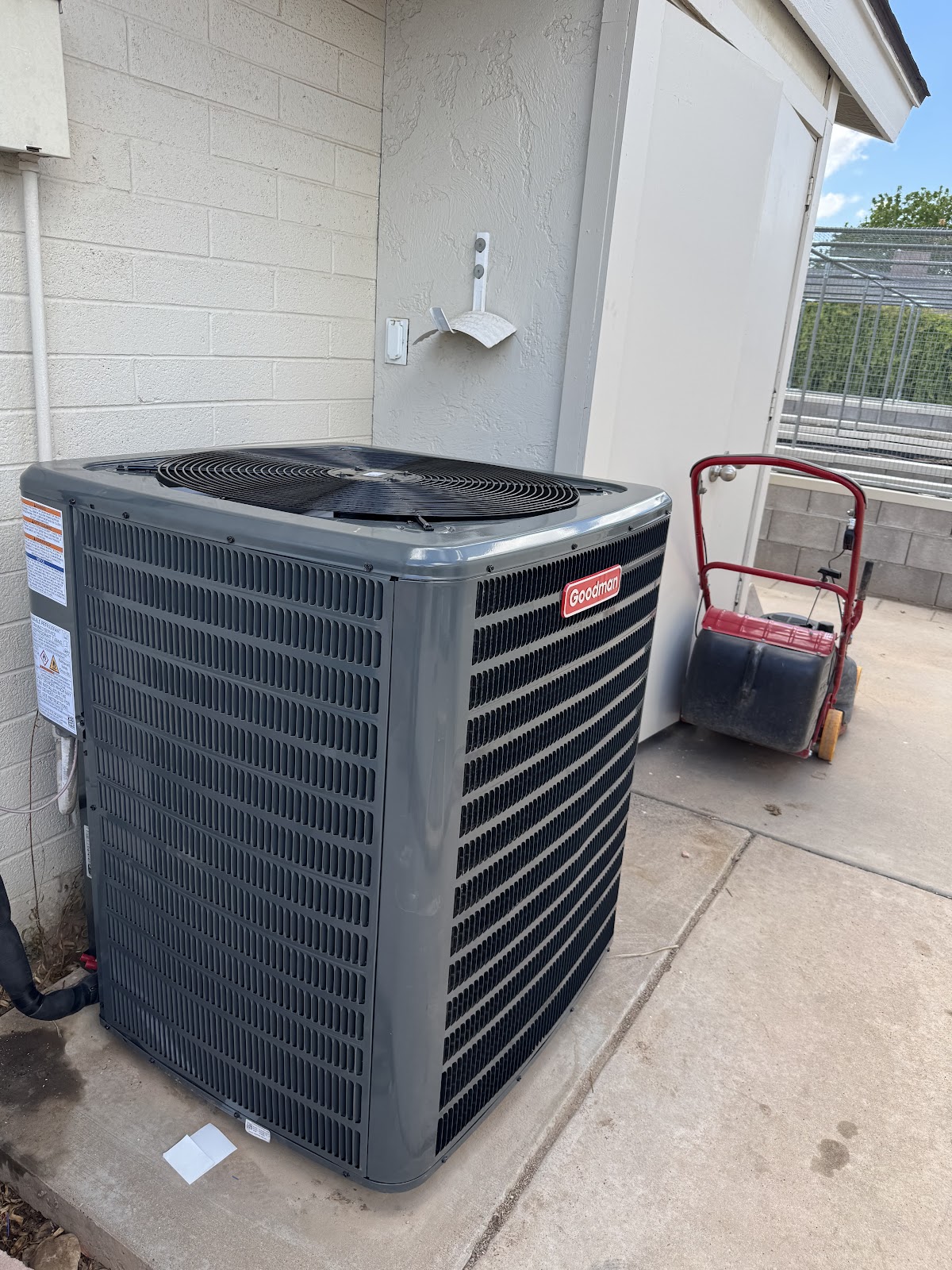
- Walk around the outdoor unit. Make sure nothing’s blocking it — trash, palm fronds, a tipped-over pool float. The unit needs clear airflow on all sides.
If none of that brings the system back, it’s time to call.
What to Expect When You Call for 24/7 Emergency HVAC in Chandler
A few things worth knowing before you dial:
Dispatch priority. Reputable companies prioritize true emergencies — no cooling in extreme heat, vulnerable residents, gas or electrical issues. If your situation isn’t urgent, they may schedule you first thing the next day at standard rates.
After-hours pricing. Expect a higher diagnostic fee outside of regular business hours. This isn’t gouging — it reflects on-call labor and the reality that parts suppliers are closed, so techs sometimes carry premium-priced van stock to make repairs happen overnight.
Common after-hours repairs. Capacitor replacements, contactor replacements, condensate switch resets, blown fuses, and refrigerant top-offs (when paired with leak detection later) make up the bulk of what we see on emergency calls in Mesa, Tempe, and Chandler. These are typically same-night fixes.
When a temporary fix is the right call. Sometimes the proper repair — say, a compressor replacement or a coil swap — can’t happen at 1 a.m. A good tech will get you cooling again with a workaround, then schedule the permanent repair during normal hours when parts pricing is better and the work can be done in daylight.
Heat-Season Habits That Prevent Emergency Calls
Most after-hours failures we respond to in Gilbert, Apache Junction, and Fountain Hills trace back to deferred maintenance. A few habits cut the risk dramatically:
- Spring tune-up before May. Capacitors, contactors, and refrigerant levels all get checked. Catching a weak capacitor in April costs a fraction of replacing it on a Saturday night in July.
- Filter changes every 30–60 days during heavy use. Pleated 1-inch filters in Arizona dust don’t last 90 days, no matter what the box says.
- Annual condensate line flush. Algae and dust build up fast in our climate.
- Keep an eye on SEER2 ratings if your system is over 12 years old. Newer high-SEER2 units with R-454B refrigerant aren’t just more efficient — they’re also less likely to fail mid-summer because the components are newer and properly sized.
- Duct sealing. A surprising number of “my AC can’t keep up” calls are actually duct leakage in the attic, where temps exceed 140°F. Sealed ducts mean less runtime and less stress on the equipment.
When in Doubt, Call
If your home is uncomfortable and you’re not sure whether it qualifies as an emergency, call anyway. A two-minute phone conversation with a technician can usually sort out whether you need someone on-site tonight or a morning appointment. We’d rather talk you through a thermostat reset for free than have you sit in a 95-degree house second-guessing yourself.
Rush HVAC Services handles 24/7 emergency HVAC in Chandler and the surrounding areas — Mesa, Gilbert, Sun Lakes, Queen Creek, Tempe, Ahwatukee, Scottsdale, Paradise Valley, Apache Junction, San Tan Valley, and Fountain Hills. Whether you need someone out tonight or you’d like to schedule a spring tune-up before the heat sets in, give us a call or request a free estimate. We’ll give you a straight answer on what’s wrong, what it’ll cost, and how soon we can have your home comfortable again.